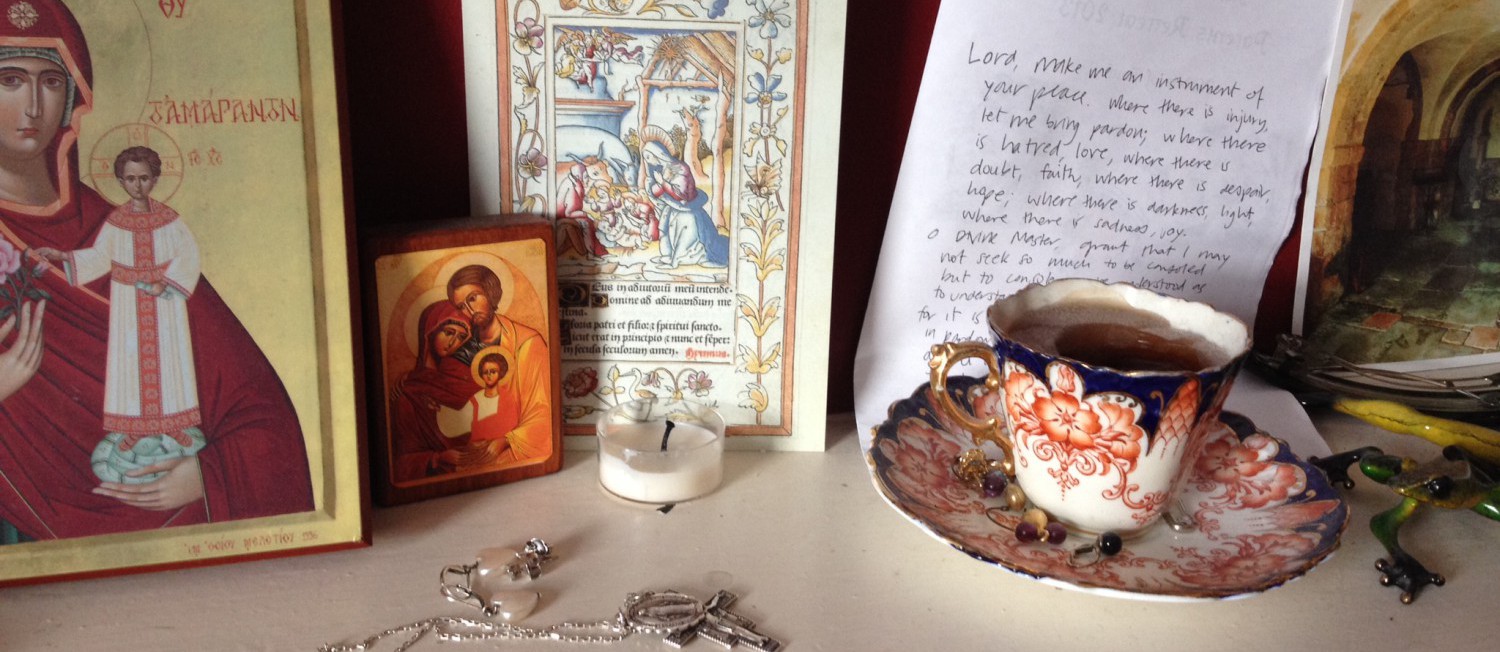
I hope it goes without saying that I’m thinking about the Immaculate Conception of the Blessed Virgin Mary. It’s an old doctrine, hundreds of years older than its ex cathedra proclamation in 1854.
It occurred to me this morning, reading the couple of paragraphs offered by universalis, that being free from original sin didn’t just allow Mary to say ‘Yes’, but to say ‘Yes’ without selfish motives. The remark that sparked this reflection was not central, and I had forgotten it by the time I picked up my pen. But it was like a window being opened and letting in a draught, or the smell of a neighbour’s bacon cooking. In my imagination, the main barrier to saying ‘Yes’ to God is fear. After all, it is what the Angel Gabriel said to Mary: ‘Do not be afraid’; ‘Noli timere‘. It is also what Jesus said to Simon Peter in the boat full of fish: ‘Do not be afraid.’ Yet fear is not the only potential obstacle to Mary’s faithful yes–that is, if she were tainted by original sin. A faithful yes might also be spoiled by pride, by a calculation of what she might gain by it.
What a great bargaining position to be in! ‘Well’, she might say, ‘see what I have done for you, God…’ Talk about the opportunity for guilt-tripping your offspring. And when your son is God, imagine the power you might have as a parent. No, fear is not the only sin from which Mary needed to be free. Its partner in selfishness, pride, would have been equally disastrous. She might have said yes for the wrong reasons.
But she didn’t. She didn’t because of the mystery we celebrate today: her Immaculate Conception. If Jesus in the garden of Gethsemane shows us what a human will looks like in perfect cooperation with God, Mary shows us what it looks like to live without sin. It’s not what we think, I expect. It certainly isn’t what I think of when I dream of a life without sin. Sure, she ponders in her heart the remarkable experience of his birth and the days that followed; together with her husband, she took the baby to be presented at the temple, as the law required. The Holy Family made the trip to Jerusalem in the company of the faithful. And then, she scolds her son for staying behind without a word to his parents. She felt that worry and hurt so common to parents. She intervened to save a couple’s marriage feast–as the gospel reading for vigils today reminds us. Mary was the life and soul of that party, for certain–not the holier-than-thou sort of person I’d associate with the words ‘without sin’. And the one who said yes to God didn’t take no for an answer from him. ‘Do whatever he tells you’, she said to the servants.
So also she says to us: ‘Do whatever he tells you.’ I’d like to think that the reward for doing so is ‘the best wine.’ But it seems unlikely that the servants had a chance to savour it. What they did get was a front-row seat at our Lord’s first miracle. I’m not sure what that means for me today, but I’d like to find out.
Hail Mary, full of grace…
Deo gratias.
 I confess to a certain amount of bitterness, when faced with images of a beautiful young madonna and her cherubic child. One such statue stands in a Lady Chapel which is otherwise one of my favourite places on earth. But before that very young woman I feel deeply sad: sad that my own babies are no longer babies, that the magical days of their toddlerhood are behind me. Not that those times weren’t exhausting and often vexatious. But amidst the thousand small things that the littlest ones need doing for them, there was magic. I didn’t need anyone to tell me that I would miss those days, difficult as they sometimes were: I knew it.
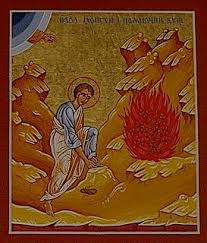 The glory of God might seem an odd topic for reflection during Lent. After all, we omit the Gloria at Mass, and we direct our attention to the Lord’s temptation and his passion. But the Sanctus reminds us, week by week—even during Lent—that ‘heaven and earth are full of [God’s] glory’. We don’t always recognize that glory: it is hidden. As John’s gospel tells us: ‘the Word became flesh and dwelt among us, full of grace and truth; we have beheld his glory, glory as of the only Son of the Father’ (1.14). Jesus makes God known to us; all the fullness of the Godhead was pleased to dwell—hidden—in Christ. Peter, James and John glimpsed that glory at the transfiguration of the Lord. They learned to see in Jesus, even after his brightness subsided, the radiance of divine glory. So also we learn to see the world differently as the eyes of our hearts are trained by faith: to see Christ’s presence in the Eucharist, for example; or to see his face in the faces of the poor and the marginalized.
 In my quasi-professional life, the life in which I write the sorts of things academic theologians are supposed to write but without any compensation for doing so, I am working on an essay on Catholic moral anthropology. Mostly I stick pretty close to what the official teaching of the Church is–this piece is, after all, for the Oxford Handbook of Catholic Theology.
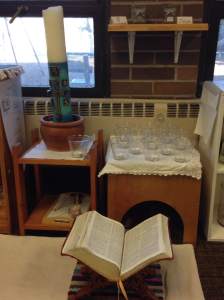 Today in the atrium we had a special Easter celebration called the “Liturgy of Light.”
  a theologian in the family