you’re having a baby

Mark Schrad’s op-ed piece for the New York Times is balanced and thoughtful. I am very glad he and his wife chose to have their daughter despite the diagnosis of trisomy-21. But I worry about the way this conversation is going. I worry, because there is a significant difference between the choice to end a pregnancy and the choice not to have a particular baby.

A few years ago, I reviewed Judith Butler’s Frames of War for Modern Theology (27 (3):540-542). As usual, Butler’s writing is challenging and thought-provoking, and covers a wide range of terrain. But one claim in particular stood out to me (and I refer to it in the review): the shift from seeing others as occupying the same moral and political space (i.e. being ‘modern’) to seeing them as outside that space allows us to disregard their common humanity. Now, that is a gross oversimplification, I am sure, of Butler’s nuanced proposal. Yet the basic idea, that the liberal subject is only able to be a party to the waging of war if a sort of shift takes place psychologically, is one of the conclusions of the book. Butler urges us to resist this shift.

What on earth, you might ask, does that have to do with abortion? Butler would surely argue for the woman’s right to choose in every case–or would she? In the event of an unwanted pregnancy, certainly. But once the pregnancy has been accepted and a baby is on the way, the moral ground that we are on changes. Pre-natal testing happens in order for us to find out what sort of baby we’re having and gives us the basis on which to choose whether or not this baby is one we want. The diagnosis, in the case of a baby with Trisomy-21, provides the pivot-point on which we are invited to shift our perspective: the baby would be ‘baby’ if s/he were healthy; the baby with Trisomy-21 loses the claim on our care because s/he is not ‘healthy’ or ‘normal’. That is exactly the shift that we ought to resist.

Having said that, I would add that all those who agree on this question ought to be working very hard to make life with a child (or adult son or daughter) conceivable as good. There is no getting around the fact that raising a child with Trisomy-21 (not to speak of a whole range of more serious diagnoses) will be challenging, and often (but not always–lots happens in the raising of typical kids) more challenging than raising a child with a standard set of chromosomes. We who claim that the child with Down Syndrome ought to be welcomed as warmly as the ‘typical’ child have then to share in the responsibility for loving and supporting that child and his or her family.
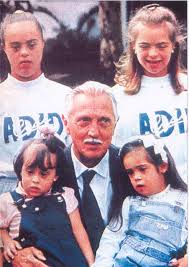
imagesJerome Lejune–in the centre of the photo here–did not intend for his work on the chromosomal abnormality that causes Down syndrome to be used to eliminate Down syndrome. He surely would have admitted that it’s not an easy road, and no one can walk it alone. But he would have urged us to see that which many of us who are raising (or have raised) children with Down syndrome have learned: it is not an impossible road, and it is one that can be very beautiful, if we have the eyes to see it.
hope in difficult times

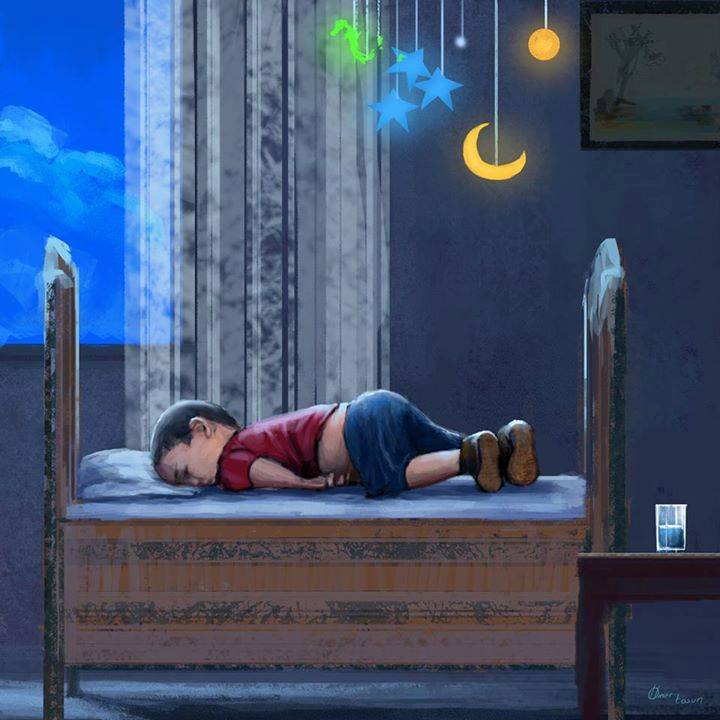
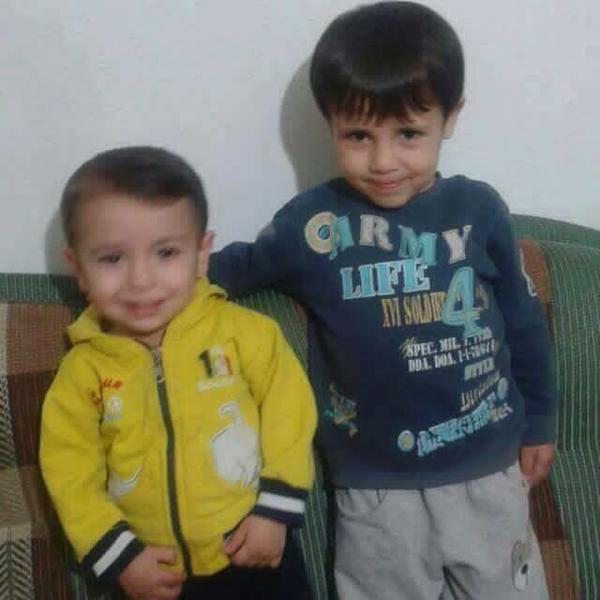
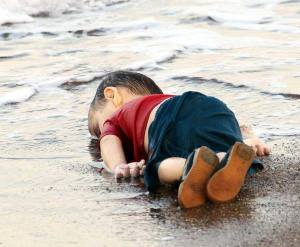
11986612_1707051179515358_7868352098734767431_nI cried when I saw the photo of that very small boy washed up on the beach in Turkey. How could I not? My own so small girl went to school this morning, dressed in her uniform, curls bouncing behind her. That is how it should be. Yet so many parents are struggling just to get their children to safety. As a parent, I am heartbroken. As a citizen of the so-called developed world (developed technologically, perhaps, but downright backward in its values), I am ashamed of us. How did the world get to be like this? In the words of Cardinal Altamirano at the end of The Mission: ‘Thus we have made the world. Thus have made it.’

But I cannot stay here: babies are being born in safety, people are finding their way, and the little things must still be occasions for joy, even in the midst of such powerful and deep grief. Though I mourn for this small boy, his only-slightly-less-small brother, and his parents, I must hope. I must hope and allow joy to break through. So I turn to one of my very favorite passages in a very good book: The Return of the Prodigal Son, by Henri Nouwen. He talks in this passage about ‘a friend’ whom I have always admired. (I think it is Jean Vanier, but Jean doesn’t admit it!) I pray that we can all find this joy and allow it to give us courage as we work to make the world a place in which small boys and girls play and sleep and laugh in safety.

I have a friend who is so deeply connected with God that he can see joy where I expect only sadness. He travels much and meets countless people. When he returns home, I always expect him to tell me about the difficult economic situation of the countries he visited, about the great injustices he heard about, and the pain he has seen. But even though he is very aware of the great upheaval of the world, he seldom speaks of it. When he shares his experiences, he tells about the hidden joys he has discovered. He tells about a man, a woman, of a child who brought him hope and peace. He tells about little groups of people who are faithful to each other in the midst of all the turmoil. He tells about the small wonders of God. At times I realize I am disappointed because I want to hear “newspaper news,” exciting and exhilarating stories that can be talked about among friends. But he never responds to my need for sensationalism. He keeps saying: “I saw something very small and very beautiful, something that gave me much joy.”

The father of the prodigal son gives himself totally to the joy that his returning son brings to him. I have to learn from that. I have to learn to “steal” all the real joy there is to steal and lift it up for others to see. Yes, I know that not everybody has been converted yet, that there is not yet peace everywhere, that all pain has not yet been taken away, but still, I see people turning and returning home; I hear voices that pray; I notice moments of forgiveness, and I witness many signs of hope. I don’t have to wait until all is well, but I can celebrate every little hint of the Kingdom that is at hand.

This is a real discipline. It requires choosing for the light even when there is much darkness to frighten me, choosing for life when even when the forces of death are so visible, and choosing for the truth even when I am surrounded with lies. I am tempted to be so impressed by the obvious sadness of the human condition that I no longer claim the joy manifesting itself in many small but very real ways. The reward of choosing joy is joy itself. Living among people with mental disabilities has convinced me of that. There is so much rejection, pain, and, woundedness among us, but once you choose to claim the joy hidden in the midst of all suffering, life becomes celebration. Joy never denies the sadness, but transforms it to a fertile soil for more joy. 

I don’t know how to celebrate in the midst of this deep sadness. I don’t know how not to feel guilty about the comfort and safety of my situation. So for the dead, I pray, let perpetual light shine on them; may they rest in peace. And for myself and all the world, I pray, kyrie eleison.11990663_1707154162838393_6753303827297769423_n

‘Happiness is the truth’: brief reflections on the common good

Pharrell Williams may be onto something. Happiness plays a central role in our lives, of course. My hunch is that happiness also reflects the life of God in us–that business about humans being created in the image of God isn’t just about rationality and the freedom of the will. Or, rather, the freedom and rationality that we exercise (on our good days, when we’re using them well) best show forth the divine image when exercised joyfully and compassionately.

We all know that happiness is important. We strive for it but so often fail to achieve it. We find it in the most unlikely (we think) places. And we don’t think of happiness as contributing to the common good. The US Declaration of Independence suggests that ‘the pursuit of happiness’ is one of our God-given rights, yet we miss its profound importance for our life together. We tend to think that people who achieve great things make the greatest contributions to the world. And I would certainly not want to argue against key advances in science, in medicine, even in technology (without which I wouldn’t be writing this blog). But I don’t see that those things make us happier.

I think we need to value far more highly the people whose contribution to our world is happiness–joy, peace and contentment. If those are the really important people, then our priorities have to shift a bit. People with intellectual disabilities often make this kind of contribution, as John Franklin Stephens suggests in a recent blog post. And, of course, children very often make this kind of contribution. Children like these:

CN7i6FwWgAAkkW1

We have got it all wrong, I’m afraid. We, in the comfortable houses in the safe places of the world have come to value our security and prosperity, our comfort. But we’re not happy. We need children and those whose joy has been tested; we need to extend ourselves on behalf of those in need and in danger. Isaiah calls the people of Israel to ‘care your bread with the hungry, and bring the homeless poor into your house’ (58.7).

Then your light shall break forth like the dawn, and your healing shall spring up speedily;           your righteousness shall go before you, the glory of the Lord will be your rear guard…

If you pour yourself out for the hungry and satisfy the desire of the afflicted,                   then shall your light rise in the darkness and your gloom be as the noonday.

If that’s not a recipe for happiness, and for the common good, I don’t know what is.

Stating the obvious: Black Lives Matter

The news seems never to be cheering. Watching the US news (mostly vicariously, through my friends who post links) from the UK, I sometimes wonder whether these things are really happening. A white kids shoots nine good people in a black church? I know it happened: the President’s rendition of ‘Amazing Grace’ made it across the Atlantic. Black churches were burning, one after the other, and I wondered which decade I was in–which century, even. A young black woman with a beautiful smile makes a police officer angry–and the rest is all over social media and way too sad to recount.

Today, I came across this, which once again made me wonder whether I was still in the year 2015–a blog post in which the author describes common misconceptions about slavery. Some of the things people said would be laughable, if they didn’t contribute to all the horrible things I have been reading about on the news. Owning other people is just wrong, and when you think you own people, you don’t treat them as people. That just doesn’t seem difficult to grasp. That wrong persists every time a black person is insulted, slighted, or ignored, much less beaten or killed, because of his/her race. I know I am not saying anything here that isn’t blindingly obvious.

I feel a little as if I am living in a Dr Seuss story–Horton Hears a Who. You know the one. Horton the Elephant is trying to convince a kangaroo and some gorillas (I think) that there are people alive on a speck of dust. All the whos in Who-ville are out making a noise, trying to be heard and thereby saved. All except that one kid, bouncing his yo-yo in a corner somewhere. He doesn’t have anything much to say; still, he must add his voice to the others’ in order for them to be heard. “Yopp!” he says–not even a real word, but it does the trick. Following the “yopp,” all the cries of “We are here! We are here! We are here!” come through clearly. 

Black Lives Matter.

Black Lives Matter.

Black Lives Matter.

It’s time to put down the yo-yo and speak up.

Wednesday of the 17th week in Ordinary time

images-1The readings from Exodus these past few days have inspired in me a new respect for Moses. Of course I have always been a fan of the great things he did. After all, he did part the Red Sea! What he does in the long years of wandering, though, is in some ways even more impressive. He stands in the breach, offering to bear God’s wrath when the people worship a golden calf. God declines Moses’ self-sacrifice.

Perhaps what really strikes me about Moses here is not something he is or does, but that he seems to bring out the best in God.

[Moses] called on the name of the Lord. The Lord passed before him and proclaimed, ‘The Lord, a God of tenderness and compassion, slow to anger, rich in kindness and faithfulness; for thousands he maintains his kindness, forgives faults, transgression, sin; yet he lets nothing go unchecked, punishing the father’s fault in the sons and in the grandsons to the third and fourth generation.’ And Moses bowed down to the ground at once and worshipped. ‘If I have indeed won your favour, Lord,’ he said ‘let my Lord come with us, I beg. True, they are a headstrong people, but forgive us our faults and our sins, and adopt us as your heritage.’

God reveals the divine nature as kind and compassionate. Even though sin may not go ‘unchecked’, we know (and Moses seems to know, too) that the only fault that persists is the fault not surrendered to God, the sin not confessed. God forgives. And Moses pleads with God to forgive God’s people again and again, and God does: God remains with the people, leads the people, brings the people safely to the promised land.

God doesn’t leave. However persistent the faults we bear, God stands ready to forgive and to heal. The psalm response reminds us: the Lord is compassion and love, slow to anger and rich in mercy. If only we could hold onto that firmly in dealing with ourselves and others…well, I have no idea what might happen. But I would dearly love to find out.

The Lord is compassion and love, slow to anger and rich in mercy.

Deo gratias.

I’ve got your back

At least that’s what I thought she said. I hadn’t really expected anyone to speak to me just then, as I was leaving the chapel after Mass. So I only just picked up on the fact that someone was talking to me towards the end of the sentence. I apologized to Sr Johanna, who repeated, ‘It’s nice to have you back.’

It was nice to be back at the Abbey, particularly as I was able to be there for vigils, lauds and Mass on the feast of St Benedict. Lucky me! I giggled a bit to myself later, thinking how incongruous it would have been for Sr Johanna to say ‘I’ve got your back.’ But it wouldn’t have been untrue. At least that’s what I think about monastic life. Wherever I happen to be, whether or not I am able to join in, I know that the nuns are praying, seven times a day, for all of us.

I’m grateful for my regular visits; the time I spend in the abbey is a precious gift. I am also grateful, for the abbey–maybe more grateful–when I am not there. When I am not there, especially immediately after a visit, I find myself noticing when it’s time for lauds, or none, or compline. I am always happy if I manage to say compline with the children at 7:50–that’s when compline happens at the abbey.

Still, sometimes life gets busy, and I forget that the office is being sung. Even then–perhaps especially then–those praying have ‘got my back.’

Deo gratias.

Thursday of the 13th week in ordinary time

Today’s Mass readings begin with the well-known narrative of Abraham’s near-sacrifice of his son, Isaac. After yesterday’s account of Hagar’s banishment and the threat to the life of Abraham’s other son, I wonder a little about his regard for his children. I know, I know, God has looked after those children. But I can’t help reading these passages as a mother. I would absolutely refuse to sacrifice any child, mine or not.

I say that. But how often do the daily distractions keep me from attending properly to my children? Do I really listen? Do I treat them with the dignity and respect they deserve?

No. Not always. So maybe instead of judging Abraham as a bad parent, I ought to ask for grace to be better at it myself.

the Lady Chapel

At the far right of the image above, a corner of a postcard is just visible, showing a bit of stone floor. Not just any stone floor, though: the floor of the Lady Chapel at Minster Abbey. I’d never heard of ‘thin places’ before the first time I went to Minster, but it is thin all over, and the Lady Chapel particularly so.

I always knew I would appreciate Benedictine spirituality. Before I had ever visited a monastery, I thought one day I would want to be an oblate. (Still hasn’t happened yet.) Nothing I imagined even came close to the reality of being there. The train journey from my home in the north of England takes about 5 hours and involves at least 2 changes, one of which happens in London (between Kings Cross and St Pancras). So when I arrived in Minster the first time, I felt like I was a long way from home (especially because the journey took a couple of extra finding-my-way hours).

And so I was: a long way from anything I had ever experienced before. The daily office–the rhythm of Benedictine prayer–was new to me. Nuns were new to me. Yet somehow the place felt like home almost immediately. Because I was on an individual retreat, I had no schedule other than the appointed times for prayer, and no ‘input’ apart from the daily office and Mass. In my little room, there was a Bible and a small copy of the Rule of Benedict.

Little did I know that reading Benedict’s Rule would change my life as much as anything ever has. That weekend, I was a woman adrift, looking for a spiritual beacon. That little book–hardly more than a pamphlet–convinced me that the spiritual life was for me. Not that I really doubted; it’s just that I had wondered since college whether I would ever recover the sense of purpose that I had as a member of an evangelical (and I mean that in the telling-people-about-Jesus sense, not the Christian brand-name sense) community. Being a mother of (then) three children and holding down a job as a lecturer didn’t leave much time for the intensive Bible study or hour-long quiet times I’d had all those years ago. But that was when it all seemed so vibrant and essential.

Benedict’s Rule is for monastic communities, true. But it is about how daily life is spiritual, and how to live it in a way that makes each seemingly insignificant task an act of Christian discipleship. That weekend, I learned a Latin phrase: ‘fratres non contristet.’ It comes from the instructions to the cellarer. If a brother comes to you with an unreasonable request, Benedict counsels, refuse him gently, so as not to upset (contristet) the brethren (fratres). Being a mother involves refusing countless unreasonable demands on a daily basis, at least in my house. The challenge was, and is, to make every response–yes, no, or maybe–an act of love.

That is what Benedict taught me that weekend: fratres non contristet. Every time I go into the Lady Chapel at Minster, I recommit myself to the goal of gentleness in daily life. Even with those words in large letters on my refrigerator, I forget. I forget that discipleship happens in the little things, as we do them with love. I forget that Jesus taught us more on the cross than in all the words he said. I love that saying floating around the internet at the moment: ‘if you have to chose between being right and being kind, be kind.’ Indeed. That is, to me, what gentleness is all about. But it is a lot harder than it seems! So back to the monastery I go, to find myself again in the Lady Chapel, to be in peace and grace and regulated quiet long enough to accept the fact that I have to begin again.

fratres non contristet.

moving

No vans required. I am moving all my blogs (yes, there are a number of them…) to a new website: atheologianinthefamily.net. When I started this blog, I intended to focus all my blogging on the lectionary readings. Then I started another blog for more general musings in theology and ethics. 
But my theology and my life are of a piece. I have been inspired by the prologue to the rule of Benedict, in which he describes the monastery as ‘a school for the Lord’s service.’ For me, the family is that school. Home is where we learn to love, to give, to trust, and to think. It seems to me that the most difficult place to live out the Christian faith is at home, in the family, where the daily vexations and struggles are utterly relentless. I once wrote to a friend that if anyone else tried my patience as unremittingly as my children do, I would find some means of escape. So here I am, learning to love those who are at once the easiest and most difficult people to love: those who are closest to me.
And I continue to be a theologian. I’m not a part-time theologian and a part-time mother; I am a full-time theologian and full-time mother. I think theology while I am cooking and disciplining and reading stories; I think about parenting while I am reading theology and Scripture and writing about ‘academic’ topics. These things live together in my soul, and I am both of them at the same time, by training and by temperament. As a teenager, I was certain that my future vocation had to be meaningful, and that I would have to practice it while fulfilling my other life’s goal: being a mother.
So here I am, having found that when dreams come true, they don’t always look like we expected or hoped. Living the dream means making ends meet and coping with defiance and struggling to meet deadlines and staying up late preparing for teaching. Sunny days and happy times grace my daily life, and usually I can see that my life is uncommonly good. Except when I can’t, and then the whole project of living and parenting and writing seems like it proceeds in deepest darkness. Fortunately the light continues to shine, even when my eyes are shut tight against it.
I am grateful for all who have read this blog, and hope that you will enjoy the new one.
light and peace to you all.

Moving

No vans required. I am moving all my blogs (yes, there are a number of them…) to a new website: atheologianinthefamily.net. When I started this blog, I had thought that Lewis and I would contribute to it together, and it would mostly be theological reflection.

But my theology and my life are of a piece. I have been inspired by the prologue to the rule of Benedict, in which he describes the monastery as ‘a school for the Lord’s service.’ For me, the family is that school. Home is where we learn to love, to give, to trust, and to think. It seems to me that the most difficult place to live out the Christian faith is at home, in the family, where the daily vexations and struggles are utterly relentless. I once wrote to a friend that if anyone else tried my patience as unremittingly as my children do, I would find some means of escape. So here I am, learning to love those who are at once the easiest and most difficult people to love: those who are closest to me.

And I continue to be a theologian. I’m not a part-time theologian and a part-time mother; I am a full-time theologian and full-time mother. I think theology while I am cooking and disciplining and reading stories; I think about parenting while I am reading theology and Scripture and writing about ‘academic’ topics. These things live together in my soul, and I am both of them at the same time, by training and by temperament. As a teenager, I was certain that my future vocation had to be meaningful, and that I would have to practice it while fulfilling my other life’s goal: being a mother.

So here I am, having found that when dreams come true, they don’t always look like we expected or hoped. Living the dream means making ends meet and coping with defiance and struggling to meet deadlines and staying up late preparing for teaching. Sunny days and happy times grace my daily life, and usually I can see that my life is uncommonly good. Except when I can’t, and then the whole project of living and parenting and writing seems like it proceeds in deepest darkness. Fortunately the light continues to shine, even when my eyes are shut tight against it.

I am grateful for all who have followed this blog, and hope that you will enjoy the new one.

light and peace to you all.